Match service to the required outlet
Cooling service may use available cooling water or a chilled-water circuit. The product duty follows its heating exit condition and the temperature required by the receiving operation. Specify service flow and temperature for the selected configuration rather than assuming every plant has the same utilities.
The cooling product path remains part of the monitored hygienic circuit. Include drain and cleaning connections for all selected sections.
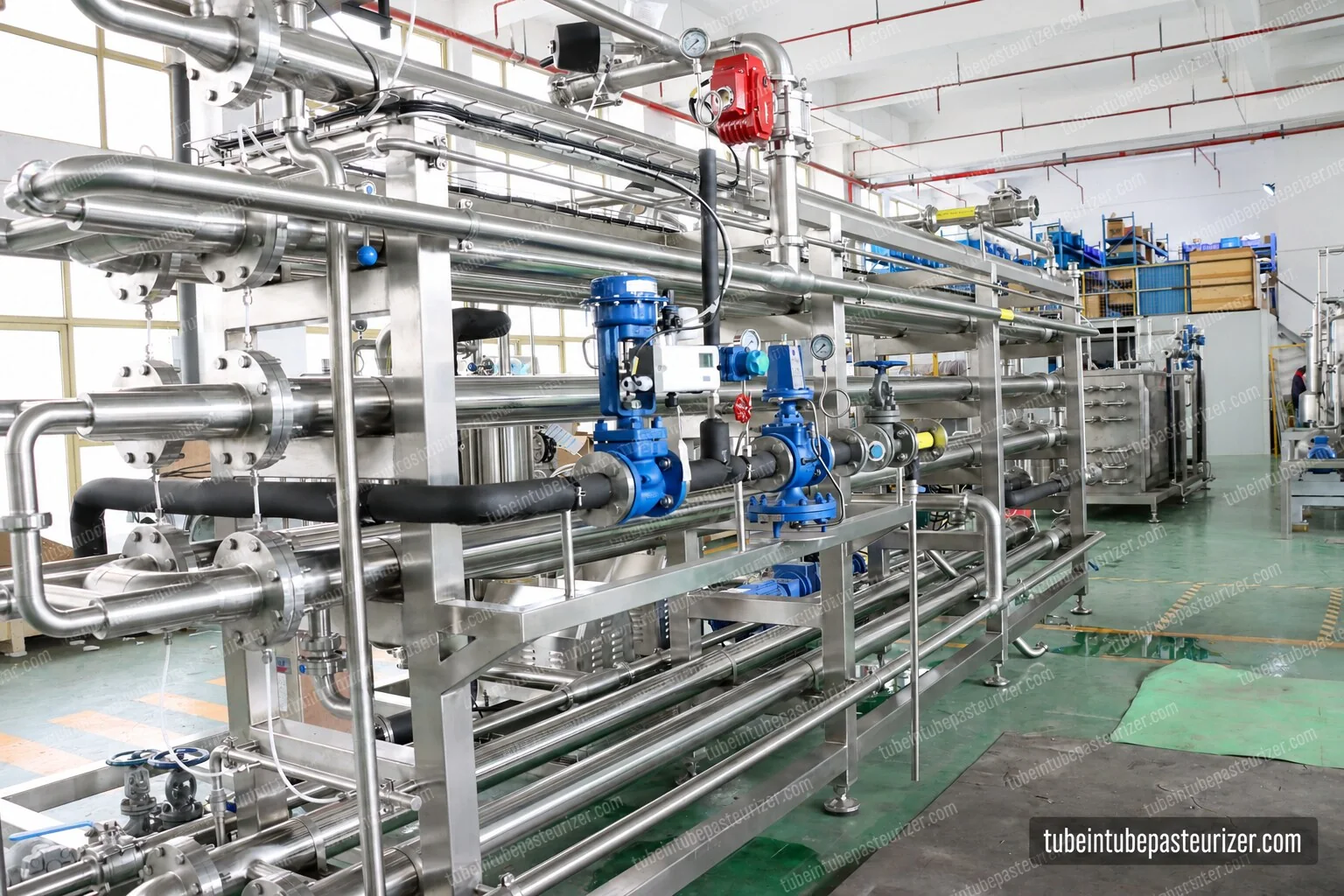
Different receiving routes need different scopes
A chilled bulk route needs suitable storage and handling after the product exits. A hot-fill route requires the chosen filler and package process to accept the product condition. An aseptic route requires separately designed downstream equipment and a maintained process boundary.
The quote identifies the outlet connection, receiving pressure, buffer or surge needs and how stops are handled. It also identifies whether filling equipment is supplied, integrated or already exists at the site.
Protect the handoff during changes of state
Startup, cleaning, recirculation, product change and downstream stops need clear routing states. Any return or diversion function is defined by the fitted valves and control sequence; it is not inferred from the presence of a panel.
An acceptance review can demonstrate the selected sequence with water before product trials. The food and package process requires its own assessment.