Supply the heating circuit steadily
The incoming product may arrive from an upstream balance vessel or a direct transfer system. Choose the feed pump for the fluid at its inlet temperature, including particles, viscosity and the pressure loss of the full path. Low feed level, interrupted upstream supply and downstream back-pressure changes need responses in the control sequence.
A buffer vessel may be included if the surrounding line requires it. The vessel in a photograph is not assigned a role without its process drawing.
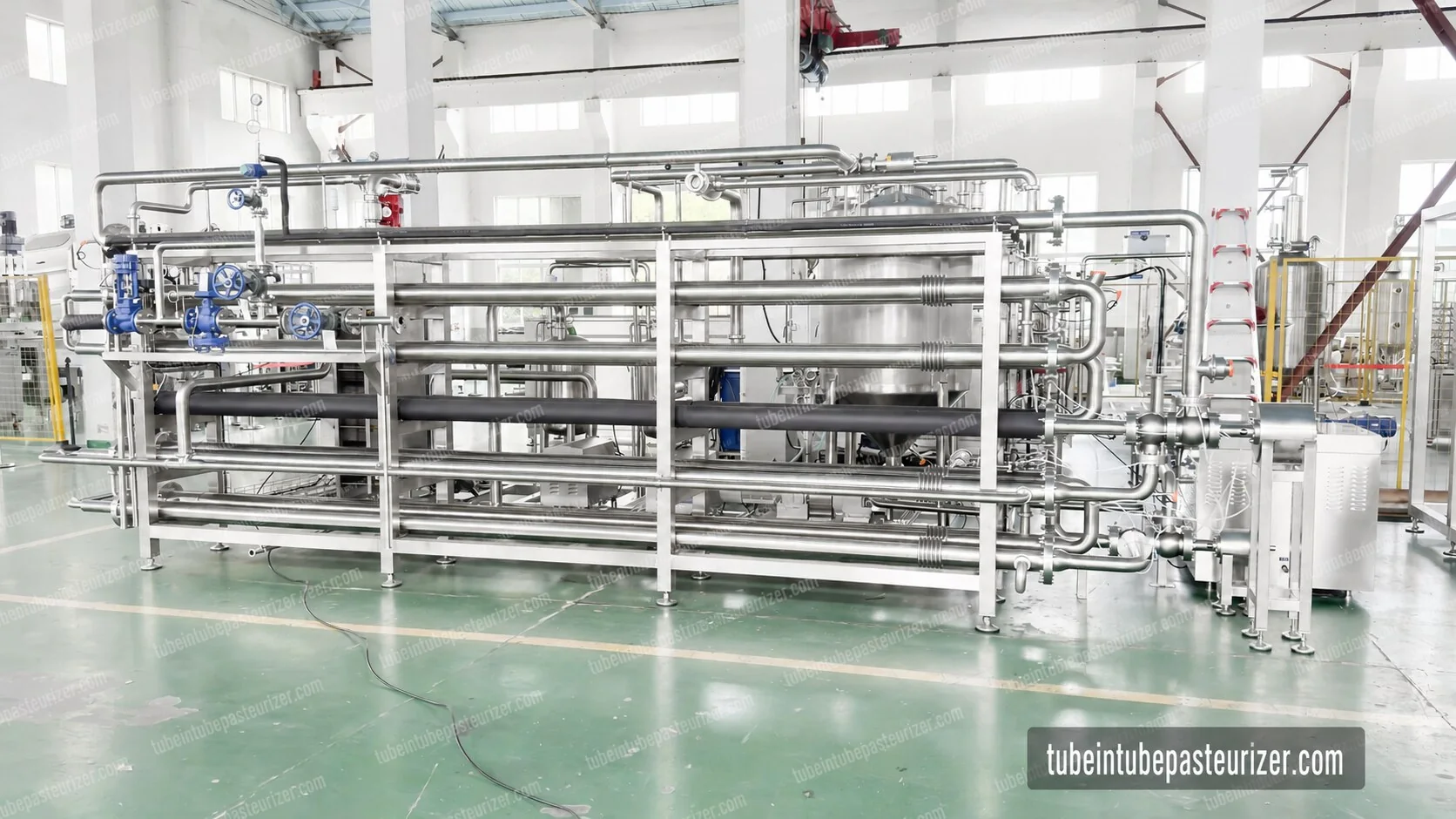
Relate holding path to actual flow
After heating, product travels through a defined holding section before the next stage. Nominal mean residence follows section volume and measured flow, but the process assessment also addresses distribution of residence times and product behaviour.
For particles, the slowest-heating portion of the food may not follow the same history as the bulk fluid. A flow rating or tube diameter cannot substitute for product-process assessment.
Specify stop and diversion states
The connection to cooling and filling needs a response when feed falls, a utility is lost, or the receiving machine stops. Where return or diversion is selected, its route and restart condition are part of the actual P&ID and control test.
During cleaning, product transfer stops and the appropriate cleaning circuit takes over. The product and cleaning media paths are kept distinct by the selected valve sequence.