Circulate through the places product touched
CIP supply enters the selected product route and returns through a defined outlet. Pumps, valves and branches need the correct cleaning position. The heating/cooling service circuits are separate from the product-contact cleaning route.
Food residue, temperature exposure and construction determine the detergent and circulation condition. The ordered operating instructions should specify the applicable sequence and compatibility of seals and materials.
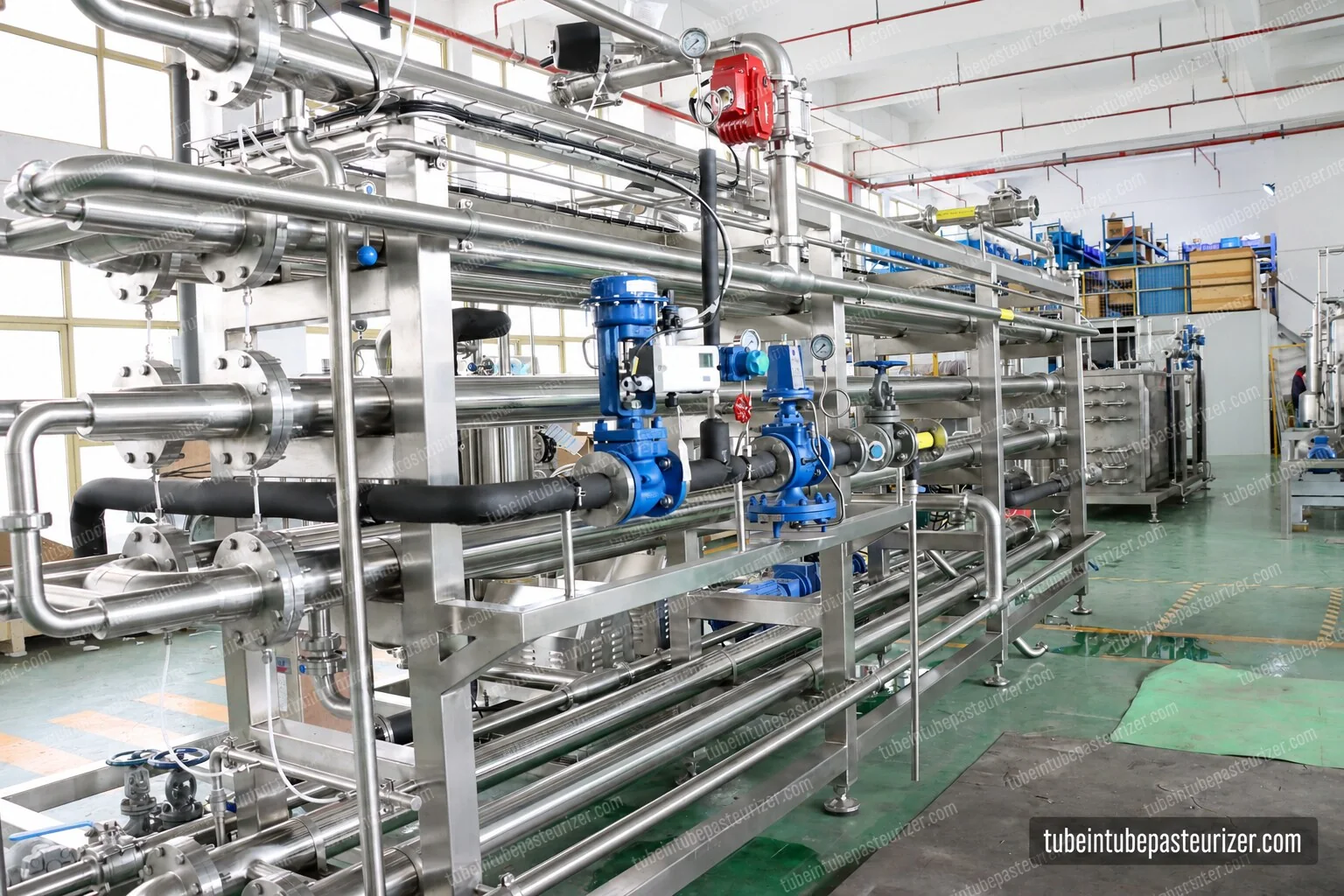
Access bends, seals and low points
Return bends, removable joints, valve seats and low points are practical inspection points. Allow space to isolate and open them. Residual product in a dead branch can remain even if the main tube run circulates cleaning liquid.
Compare cleaning-return condition and any agreed verification method, then inspect accessible surfaces when required. A generic claim of automatic CIP says too little about this actual circuit.
Cleaning and sterilization have different roles
CIP removes process soil. SIP is a separately selected preparation step where the overall process requires it. A CIP nozzle or connection does not establish SIP capability or an aseptic packaging process.
The handover identifies drain points, compatible parts, cleaning instructions and service access for the fitted assembly.