Describe the puree through its working temperatures
Give solids, fibre loading, particle distribution and viscosity at relevant temperatures. A room-temperature value may not describe the feed after heating. Record whether the texture is smooth, fibrous or contains distinct pieces, and whether product quality limits the allowable pumping action.
Match the passage and pump as one circuit
The selected passage must accommodate the product while the pump overcomes resistance through the complete heating, holding and cooling route. An opening that admits a piece is a mechanical criterion; it does not establish how the centre of that piece heats.
Review residence and the product heating history
Nominal section volume divided by flow describes a mean residence, not the history of every portion of the puree. Flow behaviour and particles can require additional product-process assessment. Proposed heating and holding conditions should therefore be linked to the real recipe and acceptable operating range.
Include cleaning and access in the quotation
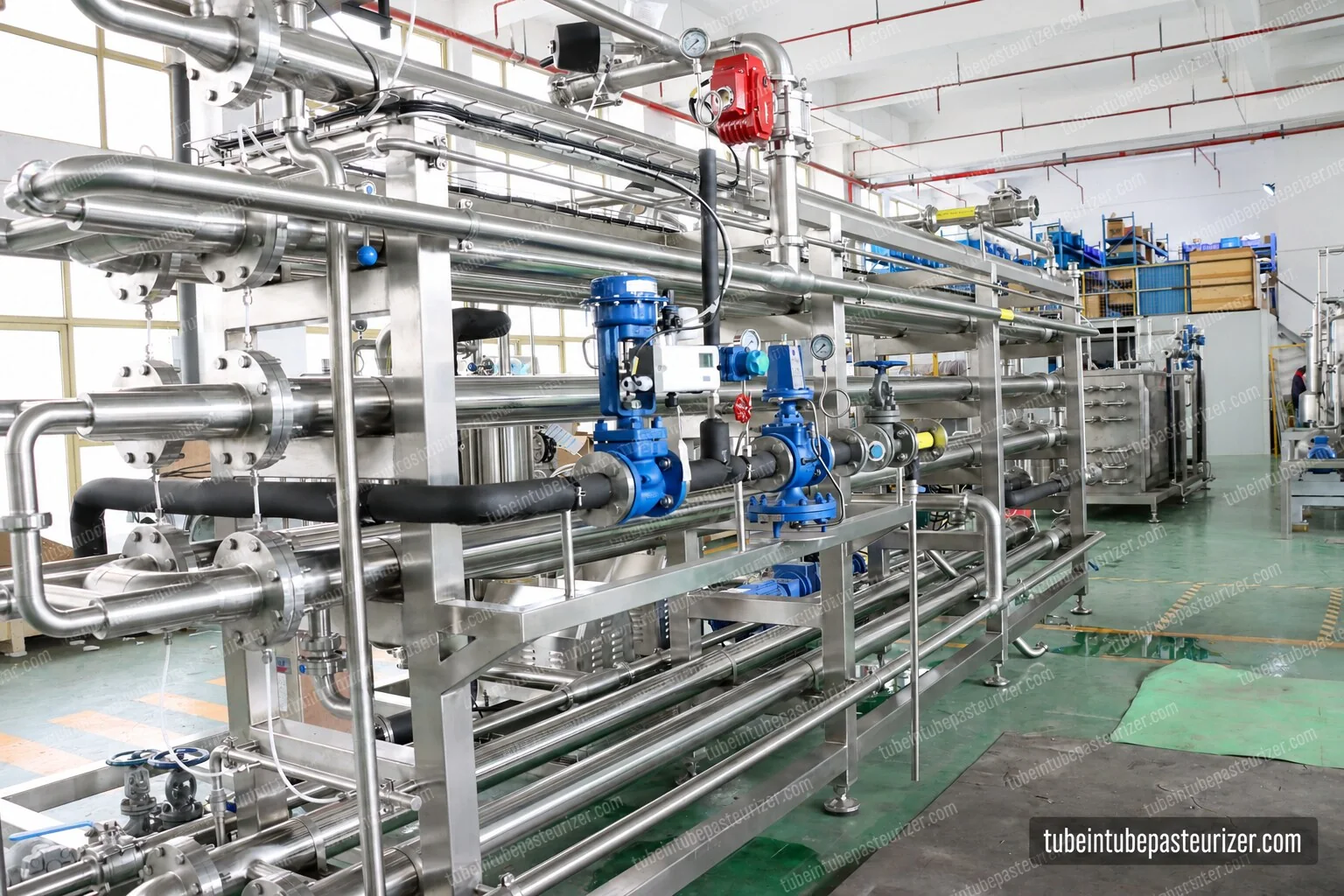
Return bends, removable joints, branches and drains affect inspection and cleaning. Ask for the fitted product-contact cleaning path and the service space needed around the equipment. Outlet conditions should also match the receiving bulk or packaging process.