Concentric, rather than a bundle of parallel product tubes
The supported family includes a four-layer concentric construction. Product and service routes are assigned to separate passages in the selected design. A section drawing and connection schedule establish which annulus carries each fluid for the ordered assembly.
A multi-tube bundle can also be called tubular in broad language, but its parallel-channel geometry differs from these concentric passages. The distinction matters for pressure loss, cleanability and particle handling.
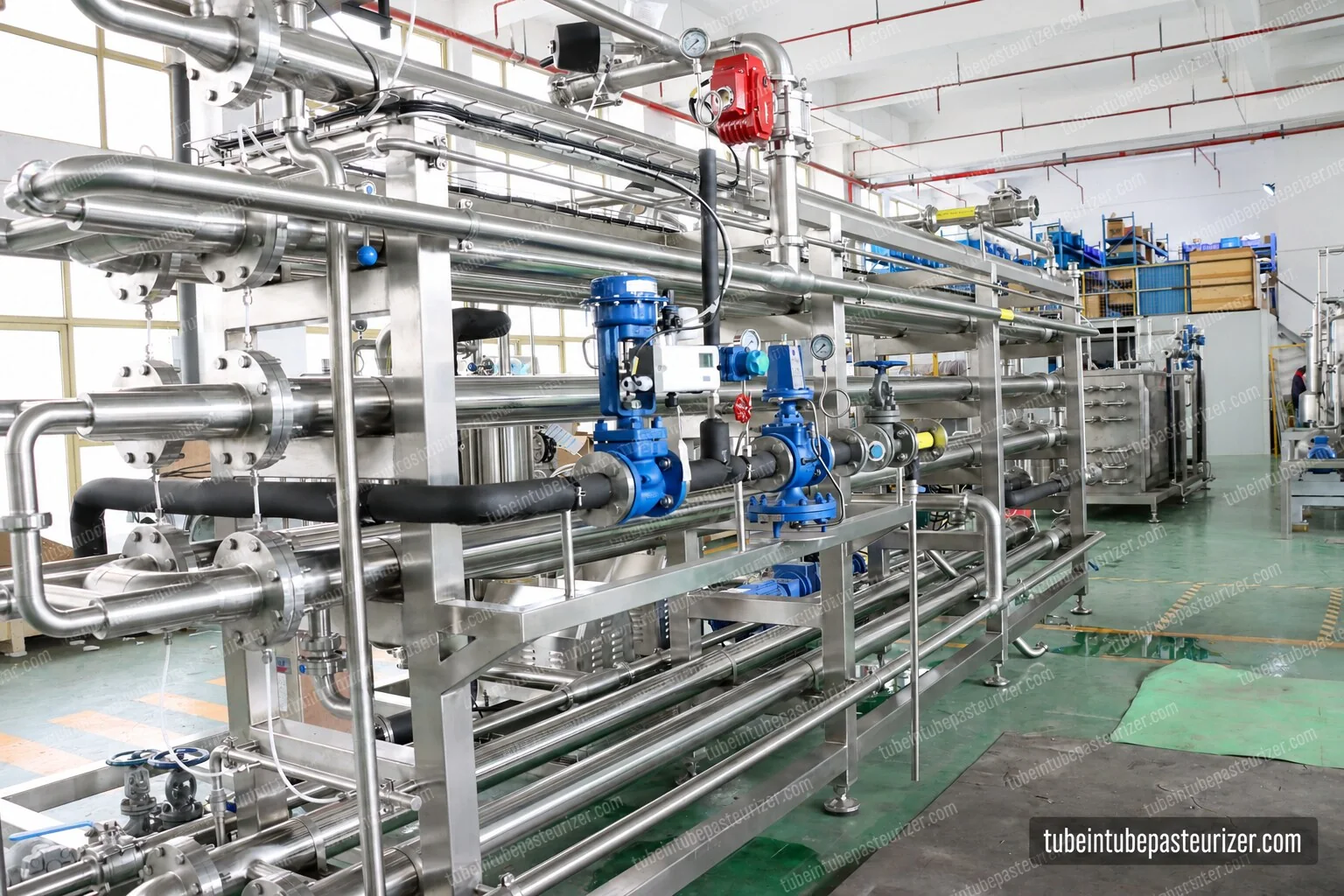
Returns and joints are part of the working circuit
Tube runs are connected by return bends and removable joints according to the selected assembly. These features route product through the chosen length and provide inspection points. The external framework supports long runs while leaving service room around valves and instruments.
A real installation needs clearance for isolation, depressurization, draining and joint opening. Choose seal material and product-contact metal for the product and cleaning exposure rather than reading them from a photograph.
Specify the wall, passage and interface as one design
Product temperature, viscosity, particles, flow range and permitted pressure loss determine the required circuit. The utility side has its own temperature, pressure and connections. The thermal duty and pumping duty must be checked together.
The published 304/316L choices are construction options within the family. The finished equipment specification identifies the actual product-contact grade, seal, surface and connection selection.